CLINICAL MEMORY
Longitudinal NIHSS Trajectory
Find 40+ prompt packs at templates.scribing.io to draft stroke notes in 5 seconds and surface NIHSS delta from the prior encounter automatically.
Specialty Clinical Playbook
Convert the spoken neurological exam into discrete NIHSS and MMSE item scores with verifiable attestation. Book your audit at https://cal.com/merryai/demo.
 Dr. Sarah Chen, MD
Specialty Architecture
Engineered to mirror the pacing, diagnostic frameworks, and documentation requirements of Outpatient Neurology & Stroke Centers.
CLINICAL MEMORY
Find 40+ prompt packs at templates.scribing.io to draft stroke notes in 5 seconds and surface NIHSS delta from the prior encounter automatically.
CONTEXT RETRIEVAL
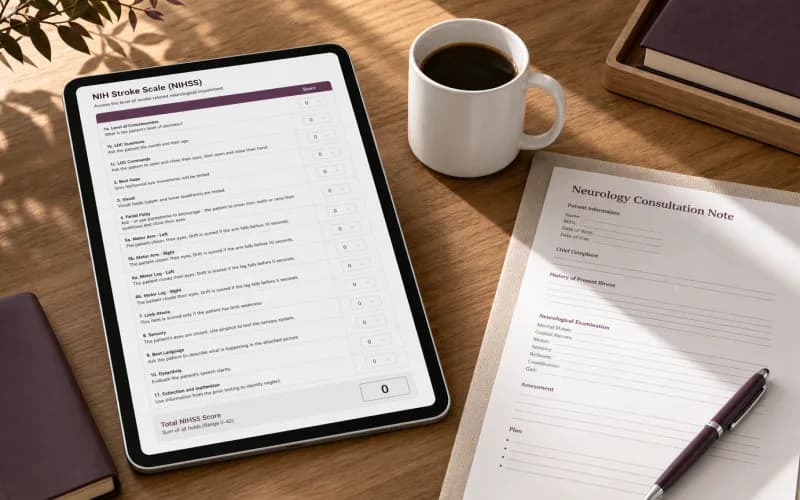
Retrieve prior MMSE totals, item-level cognitive trends, and imaging results in one structured draft without tab bouncing across the chart.
WORKFLOW INTELLIGENCE
Capture longitudinal complexity add-on revenue for post-stroke continuity care and auto-draft plans. Claim your 15-Minute Workflow Audit today.
SPECIALTY-AWARE REASONING
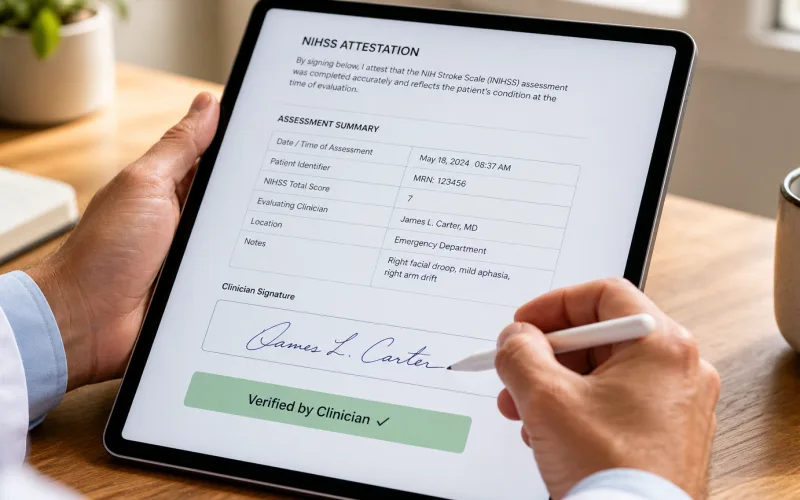
Map spoken exam descriptors to exact NIHSS and MMSE item codes, enforcing scale administration rules while the physician retains override control.
Point-of-Care Flow
Zero IT friction, zero complex API setup, and human-verified attestation on every note.

Neurologists in outpatient stroke centers carry a documentation burden that few other specialties face: the NIH Stroke Scale is a fifteen-item examination scored across a 0-to-42 range, and the Mini-Mental State Examination adds thirty more discrete cognitive data points. The tragedy is that most of this rich, structured clinical signal ends up buried in free-text narrative, incomplete, or missing a time stamp entirely. When an abstractor later reviews the chart against stroke center accreditation standards, scattered item-level notes without an explicit total are worthless.
Real-world Epic workflows already expose this fracture. NIHSS is captured across initial forms, repeat flowsheets, Stroke Narrator tools, and narrative SmartBlocks simultaneously, and clinicians must manually reconcile them. As documented in peer-reviewed neurology informatics literature at the National Library of Medicine, neurology places uniquely heavy structured-data demands on EHRs that generic templates fail to satisfy. Merry AI closes the gap by converting the spoken exam into discrete, item-level scores in real time.
The core anchor truth is simple: your neurologist performs and narrates the NIHSS and MMSE exactly as they do today. Merry listens, applies a validated mapping from natural-language descriptors to exact item codes, enforces scale administration rules, and writes both a structured grid and a compliant attestation line. No new IT project. No workflow disruption. Just clean, defensible, time-stamped data.
Every score Merry AI captures is bound to both a clinical framework and a billing or accreditation defense. The matrix below shows how spoken exam findings become audit-ready evidence.
| Specialty Diagnostic Framework | Required Clinical Data Points | Billing & Accreditation Evidence |
|---|---|---|
| NIH Stroke Scale (0-42) | 15 item scores + explicit total + exam date/time | CSTK-01 Initial NIHSS Performed; totals never inferred from components |
| Highest NIHSS post-therapy | Item deltas within defined post-tPA/EVT window | Comprehensive Stroke measure CSTK-05 compliance |
| MMSE (0-30) | Orientation, registration, attention, recall, language, visuospatial | Post-stroke cognitive trajectory for GDMT and rehab decisions |
| Longitudinal continuity | Prior NIHSS/MMSE trends, serious condition management | CPT G2211 complexity add-on (CMS MM13473) |
| Neurological exam | Cranial nerves, motor, sensory, coordination, gait | E/M Medical Decision Making level substantiation |
Joint Commission abstraction rules are unforgiving on one point in particular: if only NIHSS components are documented but no total score, abstractors must code the measure as not performed, and they are explicitly prohibited from inferring the total. Merry AI records the explicit total alongside every item, eliminating the single most common cause of failed stroke metric abstraction.
A stroke encounter is rarely a monologue. The neurologist narrates observed findings, the patient responds to cognitive prompts, and a caregiver frequently supplies the last-known-well time and functional baseline. Conflating these voices corrupts the record.
When the physician states aloud that the left arm drifts to the bed within ten seconds without contact, Merry attributes this as examiner-observed data and routes it to NIHSS motor item 5a with the correct score. The system understands that examiner narration during a scored exam is authoritative clinical observation, not patient-reported symptom.
Patient responses during MMSE orientation and three-object recall are tagged distinctly from caregiver-supplied history. This separation matters because onset timing from a spouse and the patient's own recall performance carry entirely different evidentiary weight in the chart and in any downstream medico-legal review.
NIHSS administration guidance requires items be scored in order, recorded immediately, and never retroactively coached or changed. Merry enforces these rules, handling untestable items correctly and refusing to silently correct scores in ways that conflict with the instrument's validated methodology. The physician always retains final override authority.
Because scores are stored as discrete time-stamped observations, Merry surfaces the change from prior encounters automatically. A note can read: NIHSS total 4, improved from 7 on the prior visit, with item-level detail attached. This trajectory is precisely the evidence that substantiates continuity-of-care complexity.
The fastest path to value is Merry's Chrome Extension, which performs DOM injection directly into the clinician's active Epic or athenahealth browser window. There is no marketplace registration gate, no FHIR client-credentials build, and no queue for institutional IT. The extension reads the current patient and encounter context and writes structured scores where they belong.
For Epic specifically, Merry populates the configured flowsheet FLO row IDs for NIHSS total and each item, updates the SmartData Element driving clinical decision support so an NIHSS-greater-than-or-equal-to-10 BPA still fires, and pulls the summary into the neurology note via SmartPhrase commands. For deeper deployments, Observation and DiagnosticReport FHIR resources group the fifteen item observations under a single parent panel, mirroring the interoperability pattern accreditation registries expect.
In athenahealth and EHRs lacking native stroke flowsheets, Merry generates standardized structured observation entries and cognitive assessment documents rather than mere scanned PDFs, so the data remains discrete and queryable rather than trapped in an image. Either way, the physician's signed note carries an explicit attestation stating the validated instrument was administered, item-level scores were documented discretely, and the scores were reviewed against the observed exam. You can access specialty prompts at templates.scribing.io to tune this language to your institution.
Merry AI operates as a HIPAA Business Associate with executed BAAs, transient RAM-only audio processing, zero raw-audio retention after note delivery, and full audit logging. This posture satisfies the privacy and interoperability expectations that stroke programs and their compliance officers demand before any ambient tool touches the exam room.
On the revenue side, the clean longitudinal data Merry captures directly supports HCPCS add-on code G2211. Per CMS guidance in MM13473, G2211 recognizes the visit complexity inherent to serving as the continuing focal point for a patient's single serious or complex condition, which describes post-stroke neurology precisely. Merry drafts the continuity narrative and links the prior NIHSS and MMSE trends that make the add-on defensible rather than speculative.
Most importantly, physician judgment remains paramount. Merry never finalizes a score the clinician has not reviewed and approved; the AI proposes, the neurologist disposes. This preserves both accreditation integrity and medico-legal defensibility while returning hours of documentation time to patient care. To see this run against your own stroke workflow, schedule a 15-minute specialty workflow audit and bring a de-identified encounter to walk through live.
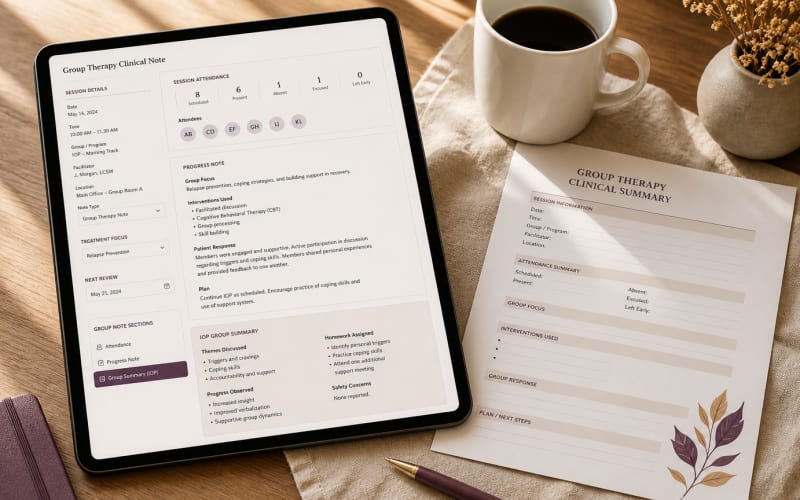
Turn one 3-hour group session into individualized, 42 CFR Part 2-compliant progress notes per client. Book your audit at https://cal.com/merryai/demo.
Ambient reasoning that captures GDMT titration, LVEF trends, and CPT G2211 complexity without a single voice command. Book your audit at https://cal.com/merryai/demo.
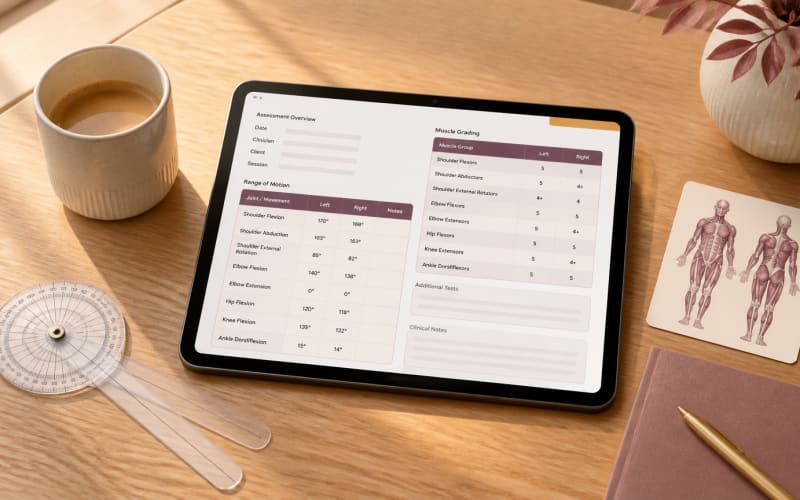
Convert spoken MSK exams into discrete ROM degrees and 0–5 strength grades that satisfy payer medical-necessity checklists. Book your audit at https://cal.com/merryai/demo.