CLINICAL MEMORY
Longitudinal Joint Memory
Find 40+ prompt packs at templates.scribing.io to generate structured MSK notes in 5 seconds and surface unresolved instability and healing questions.
Specialty Clinical Playbook
Convert spoken MSK exams into discrete ROM degrees and 0–5 strength grades that satisfy payer medical-necessity checklists. Book your audit at https://cal.com/merryai/demo.
 Dr. Sarah Chen, MD
Specialty Architecture
Engineered to mirror the pacing, diagnostic frameworks, and documentation requirements of Orthopedics & Sports Medicine.
CLINICAL MEMORY
Find 40+ prompt packs at templates.scribing.io to generate structured MSK notes in 5 seconds and surface unresolved instability and healing questions.
CONTEXT RETRIEVAL
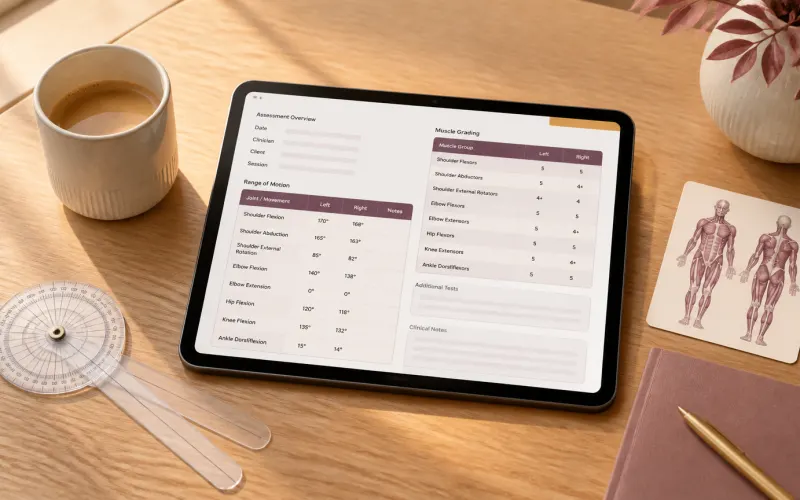
Retrieve prior ROM degrees, MMT grades, and post-op rehab milestones in one structured draft without tab bouncing across encounters.
WORKFLOW INTELLIGENCE
Capture longitudinal complexity add-on revenue for chronic MSK management and auto-draft conservative-care narratives. Claim your 15-Minute Workflow Audit today.
SPECIALTY-AWARE REASONING
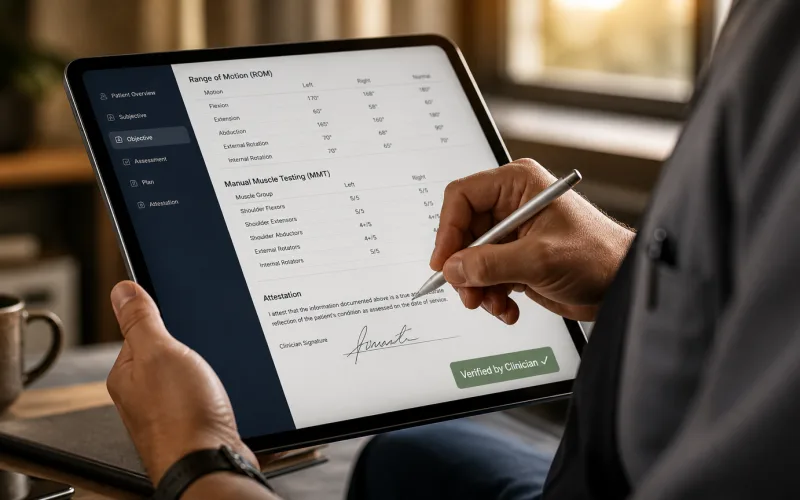
Diarize provider-patient dialogue and map spoken special-test findings directly into ortho-approved physical exam sections.
Point-of-Care Flow
Zero IT friction, zero complex API setup, and human-verified attestation on every note.
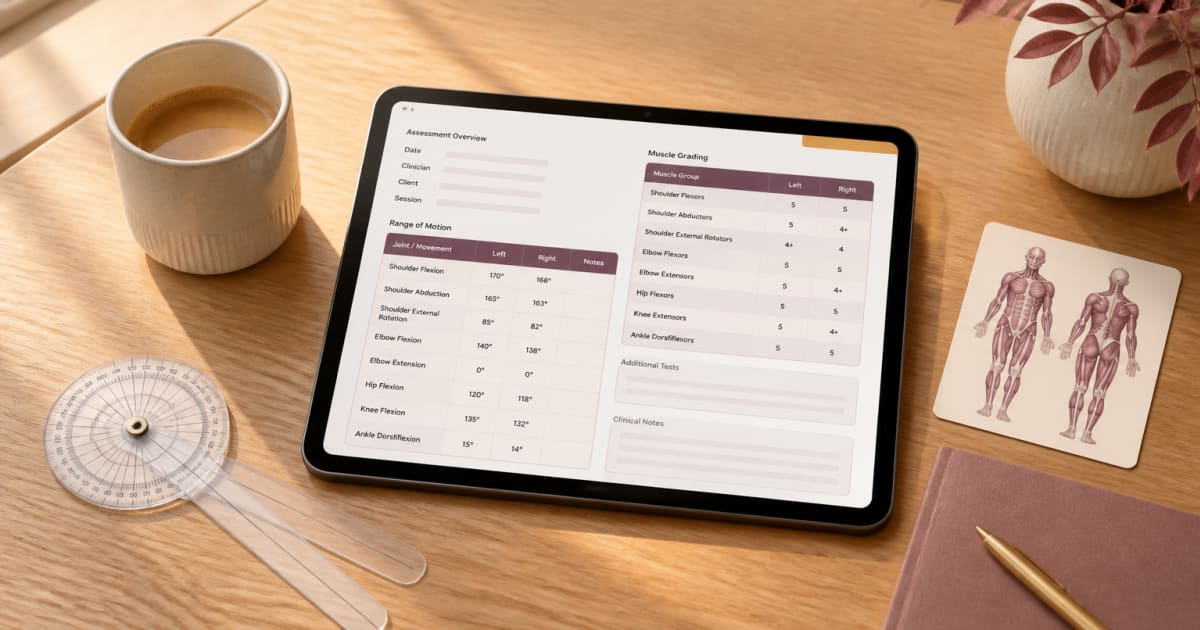
Clinical documentation in orthopedics demands something a generic ambient scribe cannot reliably produce: discrete, measurable exam data sitting alongside a defensible medical-necessity narrative. A payer reviewing a knee injection claim or a shoulder arthroscopy authorization is not persuaded by prose about how the patient 'seemed to have limited motion.' They want joint-specific range of motion in degrees, manual muscle testing on the 0–5 scale, laterality, and a clear line connecting those findings to the intervention. Merry AI was engineered around this exact structuring problem, converting spoken musculoskeletal exams into the discrete fields your EHR and your payers both expect.
The orthopedic note carries a dual burden. It must function as a clinical record that the next provider, the physical therapist, and the surgeon can act on, and it must simultaneously survive a coverage audit. CMS is explicit that medical record documentation must support coverage, coding, and billing requirements—the record should paint a clear picture of impairments, functional limitations, and the specific interventions provided. When Merry AI drafts your note, it preserves both layers: structured data for auditability and narrative clinical logic for the human reader.
Consider a routine sports medicine encounter for a recurrent lateral ankle sprain. You dictate naturally—mechanism, prior conservative management, current instability, special test results. Merry AI parses that stream into affected joint, laterality, ROM in degrees with side-to-side comparison, strength grades, pain-limited versus mechanically limited motion, and the anterior drawer finding. What was a two-minute verbal exam becomes a chart-ready note that would otherwise consume fifteen minutes of after-hours point-and-click charting.
Objective findings anchor every orthopedic medical-necessity determination. Payer policies and CMS documentation rules repeatedly emphasize measurable exam data—ROM in degrees, MMT on a 0–5 scale, and special-test results—because these are what distinguish a covered service from an unsupported claim. Merry AI does not merely transcribe 'strength was reduced'; it captures 'right supraspinatus 4/5, empty can test positive' as discrete, retrievable data points.
One nuance worth flagging for your billing team: MMT is not uniformly a separately reimbursable service. Certain manual muscle testing CPT codes were deleted, and ROM testing is separately reportable only in limited circumstances under some payer policies. The clinical value of 0–5 grading and degree-based ROM remains essential for medical necessity even where the test itself is not a standalone billable line item. Merry AI keeps the objective data intact precisely because it defends the primary service, not because it invoices a discrete test.
The following matrix maps how Merry AI aligns orthopedic diagnostic frameworks with the discrete data points each requires and the billing evidence that data ultimately defends. This is the structural core of every note the engine produces.
| Diagnostic Framework | Required Clinical Data Points | Billing Evidence |
|---|---|---|
| Joint ROM Assessment | Flexion/extension in degrees, laterality, side-to-side comparison, pain-limited vs mechanical | Supports E/M exam element count and functional-deficit necessity for imaging/therapy |
| Manual Muscle Testing (MMT 0–5) | Muscle group, graded 0–5, symmetry, functional correlation | Documents impairment severity supporting conservative-care and procedural justification |
| Special Tests | Lachman, McMurray, empty can, anterior drawer—positive/negative | Establishes diagnostic reasoning linking symptom to intervention |
| Conservative-Care History | NSAIDs, PT duration, bracing, prior injections, response | Proves failed conservative management for elective procedure authorization |
| Functional Deficit Mapping | ADL, sport, occupational limitations tied to objective findings | Satisfies CMS 'why necessary now' medical-necessity narrative |
Each row represents a distinct payer scrutiny point. When Merry AI assembles the note, it does not leave gaps that a coder must chase down later—it prompts for laterality when only one side is dictated, and it flags when conservative-care history is absent from a note attached to a procedural plan.
Athenahealth's orthopedic workflow guidance emphasizes documenting during the encounter rather than after, building repeatable templates, and using dictation or AI to reduce duplicate charting. The athenaClinicals note structure already includes Reason for Visit, History of Present Illness, Physical Exam, Procedure Documentation, and Assessment & Plan. Merry AI's structured output slots directly into these sections, transforming free-text exam narration into discrete ROM and strength fields while preserving the narrative required for audit defense.
Epic orthopedic workflows commonly depend on specialty build, structured joint templates, discrete documentation fields, and HIM deficiency controls to ensure legal sufficiency. The critical requirement is not transcription but structuring—capturing joint-by-joint exam data that inserts cleanly into Epic's note sections without losing clinical meaning. ModMed's EMA is the most naturally aligned environment, since its orthopedic-specific EHR already expects joint-based exam documentation, procedure notes, and fast insertion of structured content. Merry AI meets each of these systems where they are, via Chrome Extension DOM injection rather than fragile API queues.
Longitudinal complexity is undervalued across orthopedics. A patient in month four of ACL rehab, or a chronic osteoarthritis patient you serve as the continuing focal point of care, may support HCPCS add-on code G2211 alongside the office/outpatient E/M visit. CMS guidance confirms G2211 is not specialty-restricted and applies to ongoing care of a single serious or complex condition. Merry AI surfaces the relationship-continuity language and Medical Decision Making evidence that substantiate this add-on, turning documentation you already perform into captured revenue. Verify current payment edits against the AMA CPT resources, as CMS transmittals periodically revise G2211 edits.
Retrospective analysis of orthopedic coding after the 2021 E/M guideline changes shows measurable shifts in how providers document and code visits. The takeaway for a modern practice is that documentation quality now drives code selection more directly than ever, and structured objective data is the strongest defense against downcoding or denial. You can Access Specialty Prompts at templates.scribing.io to standardize how your group captures this evidence across every provider.
Adoption fails when technology demands that clinicians change how they think. Merry AI is deliberately built so the surgeon or sports medicine physician speaks the exam exactly as they always have—the structuring happens invisibly. There is no new template to memorize, no macro to trigger, and no IT ticket to file. The Chrome Extension runs inside the browser window you already have open.
If your group is carrying the burden of after-hours charting while still worrying about audit exposure, the fastest way to evaluate fit is to see it against your own encounter types. Schedule a 15-Minute Specialty Workflow Audit and we will walk a real orthopedic visit—ROM degrees, MMT grades, conservative-care narrative, and G2211 evidence—from spoken exam to signed note in your EHR.
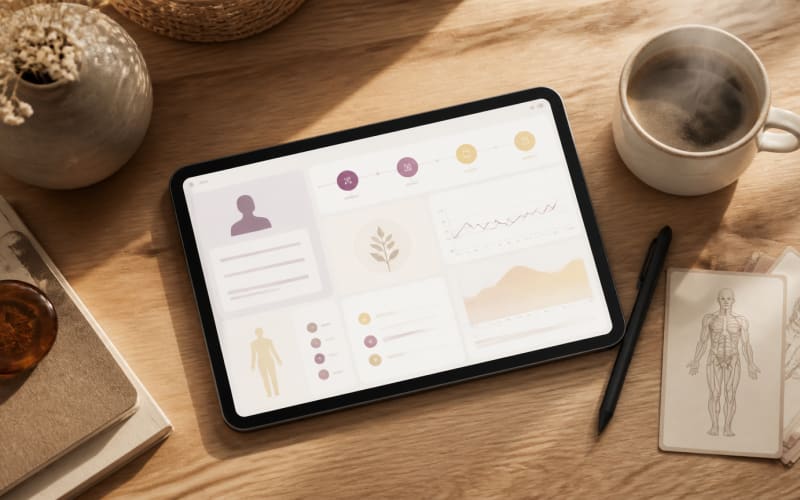
Ambient reasoning that captures GDMT titration, LVEF trends, and CPT G2211 complexity without a single voice command. Book your audit at https://cal.com/merryai/demo.
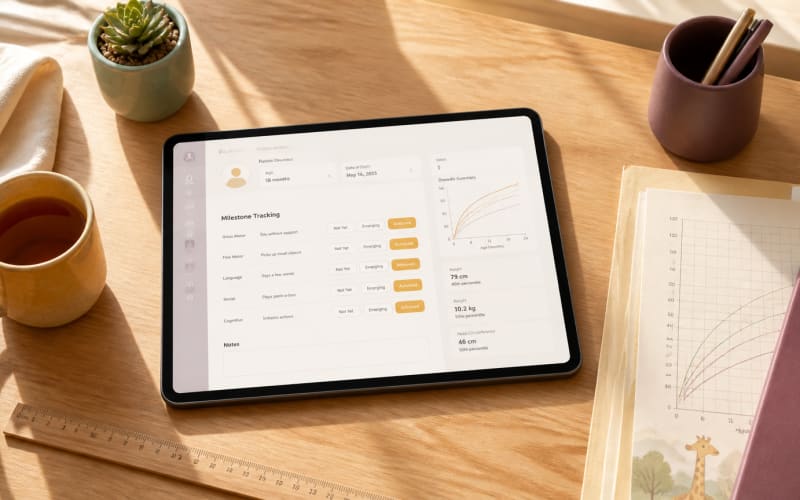
Bright Futures-aware ambient documentation with 3-speaker diarization that separates caregiver, clinician, and child voices. Book your audit at https://cal.com/merryai/demo.

Ambient documentation that respects EMA sectional boundaries, auto-maps ABCDE morphology, and defends modifier-25 logic. Book your audit at https://cal.com/merryai/demo.